Get a Quote
What Causes Mould Marks on a Ceiling?
Re-screwing iron, re-bedding & re-pointing tiles, and fast leak detection & repair before small problems get big.
The short answer
Mould on a ceiling means moisture is getting into the plasterboard and staying there. It almost always comes from a roof leak or from condensation, and each needs a different fix. Paint over either one and the mould comes back.
As a rule of thumb, a single patch with a brown ring that grows after rain points to a leak. Fine black speckling across a bathroom or bedroom ceiling, worse in winter, points to condensation.
When it's a roof leak
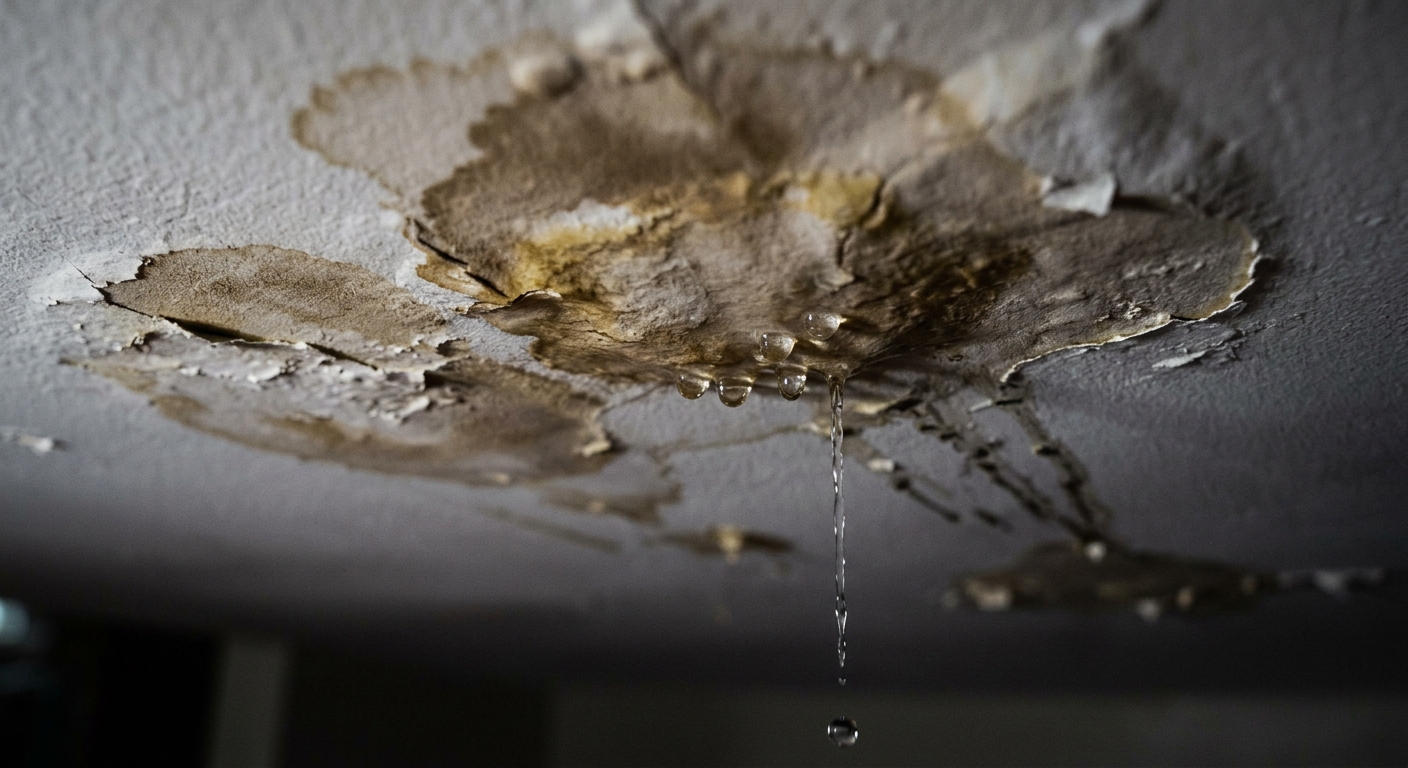
Leak mould usually sits in one patch, often with a brown or yellow ring, and gets worse after heavy rain. Bubbling paint or a sagging ceiling means water has been there a while.
The stain isn't always right under the leak, because water can run along the framing first. Common culprits are cracked tiles, failed ridge pointing, worn flashings and blocked gutters or valleys. A leaking pipe or a bathroom upstairs can look the same, so rule those out too.
When it's condensation
Showers, cooking and drying washing inside fill the air with moisture. When that warm, damp air meets a cold ceiling, it condenses and mould follows. Look for:
- Fine black spotting in bathrooms, kitchens and cold bedrooms, especially in corners
- Patches over missing or squashed ceiling insulation
- Drips and stains after cold, clear nights rather than rain, caused by condensation in the roof space
What to do about it
Fix the cause first, then the mould.
- Leak: get the roof inspected and the entry point repaired.
- Condensation: use extractor fans that vent outside, air the house daily, keep it heated and top up ceiling insulation.
- The mould: clean small patches with a mould remover, and replace any plasterboard that's soft or sagging.
Painting over it without fixing the cause only hides it for a few months.
Frequently asked questions
Why does the mould keep coming back? The moisture is still there. Mould regrows as long as the ceiling stays damp.
Can a roof leak cause mould without dripping? Yes. A slow leak can keep the back of the plasterboard damp for months, with a stain or mould as the only sign.
Is black mould on my ceiling dangerous? BRANZ notes that most black-looking mould in New Zealand homes isn't the so-called toxic type. It can still affect breathing, so clean it up and fix the cause.
Not sure if it's your roof?
We've been finding and fixing roof leaks across Auckland and Tauranga for 10 years. We'll inspect your roof and tell you straight whether it's a leak or something inside.
Call us on 09 972 1718 or request a free, no-obligation quote.