Get a Quote
How Do You Know When Your Roof Needs Restoration?
Your roof needs restoring when its protective coating has worn out but the roof underneath is still sound. Read below for more tips on what to loo out for.
The short answer
Your roof needs restoring when its protective coating has worn out but the roof underneath is still sound. The clearest signs are faded or chalky colour, moss and lichen spreading across the surface, cracked ridge pointing, rust spots on iron, and granules washing off tiles into your gutters.
Catch it at that stage and a restoration costs a fraction of a new roof. Leave it until tiles are crumbling or iron has rusted through, and you're usually looking at a full re-roof instead.
As a rough guide, most roof coatings in New Zealand start breaking down 10 to 15 years after they were applied. If your roof is in that window, or you can't remember when it was last done, it's worth a closer look. Here's what to check.
Signs you can spot from the ground
You don't need a ladder for these. Stand across the street, or use binoculars or your phone's zoom on a clear day.
- Faded, patchy or chalky colour. UV breaks the coating down until it turns dull and powdery. Chalky streaks running down the walls or collecting in gutters are a giveaway.
- Moss, lichen and black streaks. Green moss and grey-white lichen spots take root in a surface that has lost its seal. Once established, they hold moisture against the roof and eat into it.
- Rust spots or streaks. On iron, rust usually starts at the laps, around fixings and along the bottom edges of sheets. Surface rust can be treated and recoated. Rust that is flaking or holed through can't.
- Grit in your gutters and downpipes. All tiles degrade when exposed to the elements. This degradation often manifests as a sand-like compound that appears in your gutters.
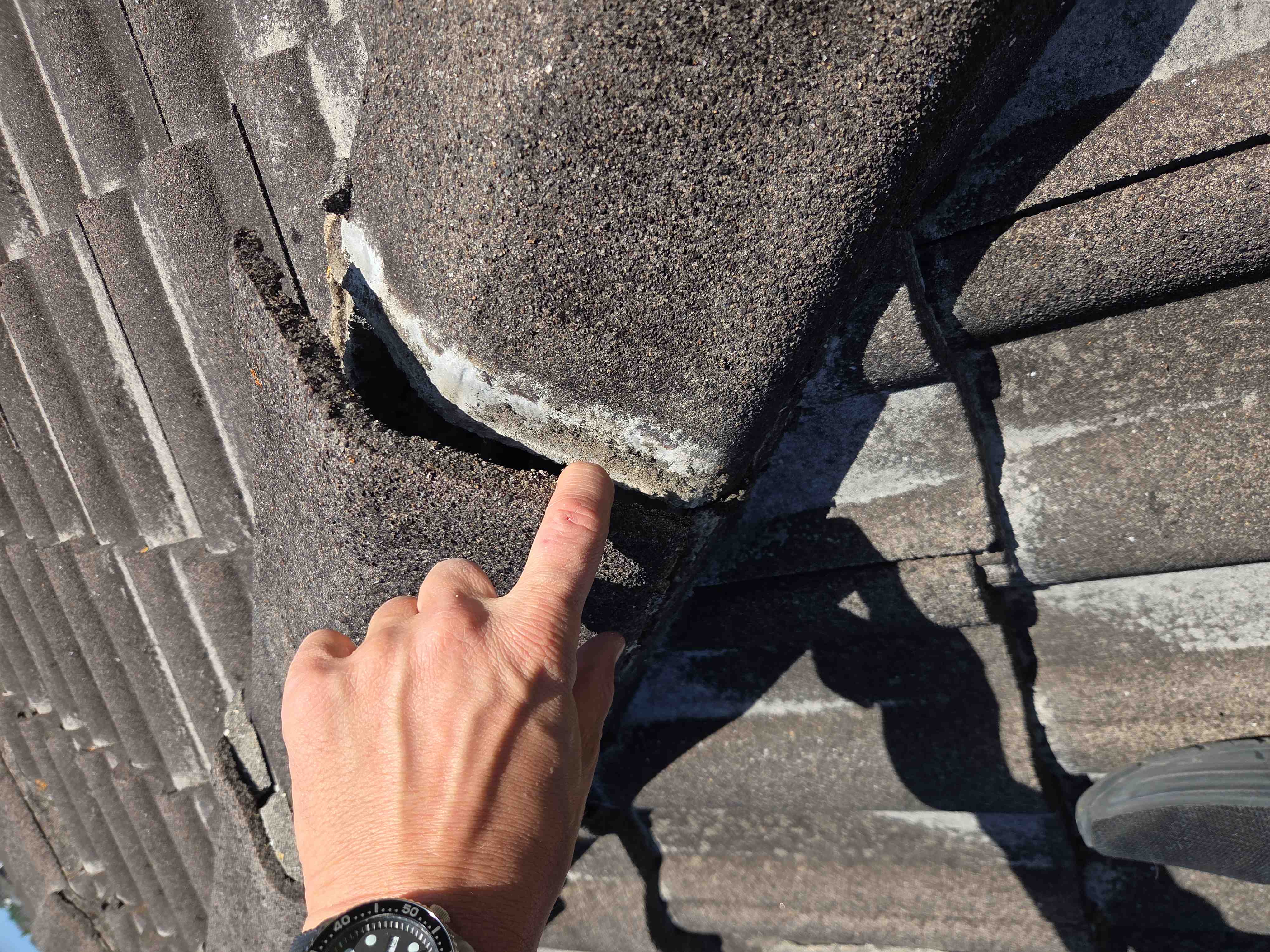
- Cracked or missing ridge pointing. On tile roofs, the mortar along the ridges and hips cracks and falls away with age. Look for gaps along the ridge line or crumbled mortar sitting on the tiles below.
- Sagging or wavy lines. A dipping ridge or an uneven roof plane can point to a structural problem. That needs checking before any coating goes on.
Signs inside the house and up close
Some problems only show from inside, or from the roof itself. You can safely check inside. Leave the roof surface to a professional with the right fall-protection gear.
Inside your home:
- Stains on ceilings or walls. Brown rings, bubbling paint or peeling around cornices, especially after heavy rain or a storm.
- Damp or musty smell in the ceiling space. After rain, take a torch up through the manhole. Look for damp timber, water-marked building paper, wet insulation or daylight showing through.
- Mould on the underside of the roof. Ongoing moisture in the roof space usually means water is getting in somewhere.
What we look for on the roof:
- Cracked, chipped or slipped tiles
- Concrete tiles that soak up water and stay dark long after rain
- Bare steel showing on Decramastic tiles
- Loose or rusted fixings and perished washers on iron
- Rusted valleys and lifted flashings around chimneys, skylights and vents
- Blocked or overflowing gutters
A leak doesn't automatically mean you need a new roof. Most leaks we find come from cracked pointing, a broken tile or a failed flashing. Those get fixed as part of the restoration, before any coating goes on.
Why Auckland and Tauranga roofs wear faster
Three local conditions work on your roof every day.
- Strong UV. New Zealand's summer sun is harsh on coatings. It fades colour and breaks down the paint film, which is why north-facing roof planes usually fail first.
- Warm, humid weather. Mild winters and frequent rain give moss and lichen ideal growing conditions all year round.
- Salt air. Many homes in both cities sit close to the harbour or the coast. Salt settles on the roof and speeds up corrosion on iron and Decramastic, especially where rain doesn't rinse it off, such as under sheet laps and in sheltered corners.
Not sure if your roof is due?
We've been restoring roofs across Auckland and Tauranga for 10 years. Our team will inspect your roof and tell you straight whether it needs a restoration, a few repairs, or nothing at all yet.
Call us on 09 972 1718 or request a free, no-obligation quote.